Selecting the right materials for foldable outdoor leisure furniture requires a careful balance between durability, weather resistance, and portable convenience. For wholesalers, retailers, and commercial buyers, understanding how different materials perform across various climates, storage conditions, and usage frequencies is essential to maximizing value for your target markets.
At Wuhan Relaxhub Supply Solutions Co., Ltd., we specialize in manufacturing and sourcing high-performance outdoor furniture engineered for the global supply chain. To help you make informed procurement decisions, we have compiled this comprehensive guide detailing the core fabric and material options commonly utilized in today's foldable outdoor furniture industry.
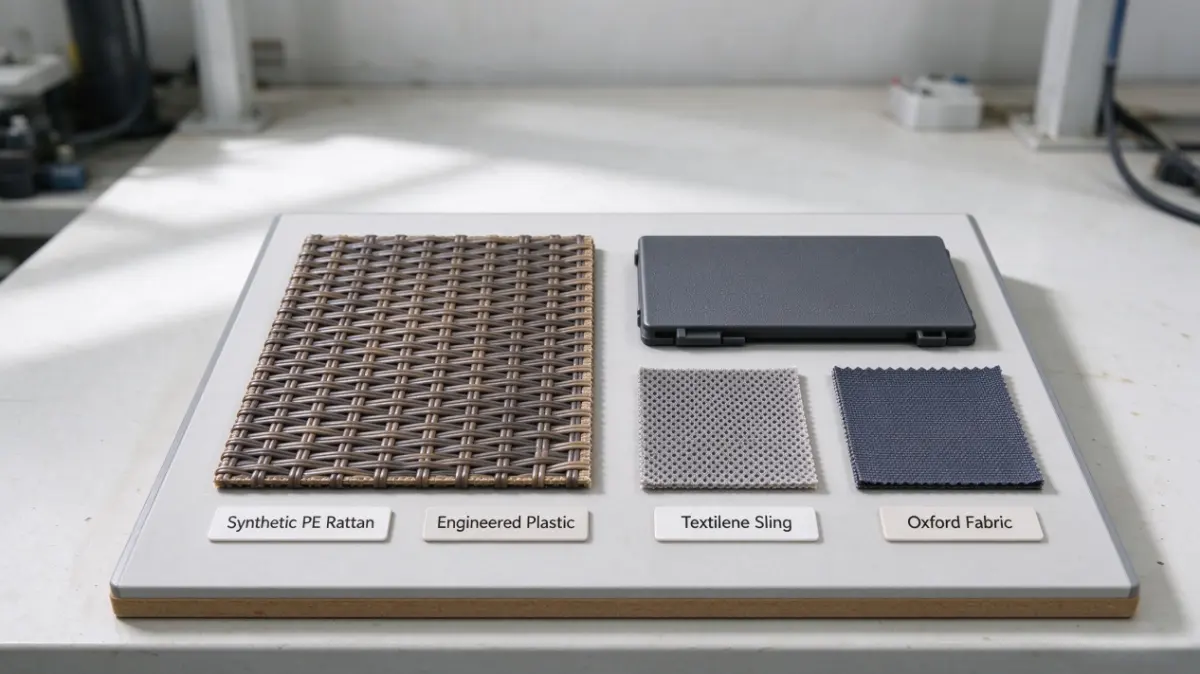
Quick Comparison: Foldable Outdoor Furniture Materials
| Material Type | Advantages & Key Benefits | Disadvantages & Risks | Typical Industry Applications |
|---|---|---|---|
| Wicker / Rattan (Synthetic) | Modern natural aesthetic; highly resistant to mold, fading, and cracking; easy to clean. | Can collect dust within complex weaves; requires sturdier internal framing. | Premium folding patio chairs, luxury balcony sets, resort leisure seating. |
| Plastic (Polymers) | Highly affordable; lightweight; completely waterproof; enables complex molded joints. | Susceptible to high-wind displacement; can become brittle under extreme UV if untreated. | Budget-conscious retail lines, event rental seating, stackable garden chairs. |
| Textiles (Sling/Mesh) | Superior breathability; zero water retention; quick-drying; ergonomic body-contouring. | Lower thermal insulation in cold climates; exposed edges require secure binding. | Poolside sun loungers, folding beach chairs, zero-gravity reclining seats. |
| Oxford Fabrics | Exceptional tensile and tear strength; compact foldability; water-resistant backings. | Less breathable than open mesh; fabric can stain if exposed to heavy grease or oils. | Heavy-duty camping chairs, portable stools, folding utility cots. |
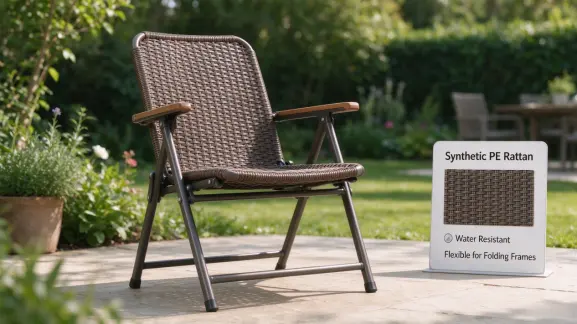
Synthetic PE rattan features water‑resistant property and works well on folding metal frames.
Wicker / Rattan
Wicker and rattan remain staples in the outdoor leisure sector, offering a timeless aesthetic paired with functional resilience. Modern outdoor furniture manufacturing primarily distinguishes between natural varieties and high-performance synthetics.
Synthetic PE Rattan
Synthetic wicker, manufactured from High-Density Polyethylene (HDPE) or PE, is engineered specifically to withstand rigorous outdoor environments. It replicates the organic texture of traditional vine weaving while providing absolute moisture, mold, and crack resistance. Because it is highly flexible, it can be woven tightly over foldable iron or aluminum structural frames, allowing furniture to fold seamlessly without stressing or snapping the material.
Natural Wicker
Natural rattan offers an authentic, rustic charm that appeals to premium eco-conscious markets. However, it remains highly susceptible to moisture absorption, rot, and prolonged UV degradation. For foldable furniture destined for high-humidity regions or frequent outdoor transit, synthetic PE rattan represents the industry-preferred standard due to its zero-maintenance profile and long-term structural integrity.
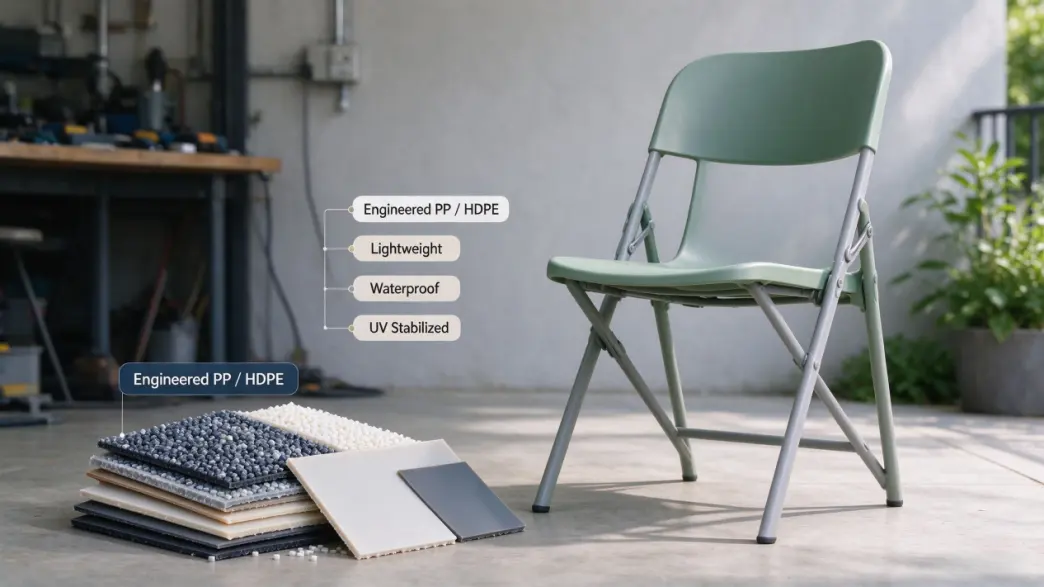
UV‑treated polymer material: lightweight, waterproof solution for high‑volume budget outdoor lines.
Plastic (Polymer Fabrications)
Industrial plastics offer exceptional structural versatility and cost efficiency, making them a cornerstone material for high-volume consumer goods and commercial event rentals.
Engineered Polypropylene (PP) & HDPE
Advanced UV-stabilized polymers resist fading and thermal embrittlement, enabling precise injection molding for space-saving stackable designs and lightweight assemblies.
Sourcing Considerations
While affordable and waterproof, lightweight plastics require anchoring in high winds. They offer high volume and competitive pricing for retail chains and online stores.
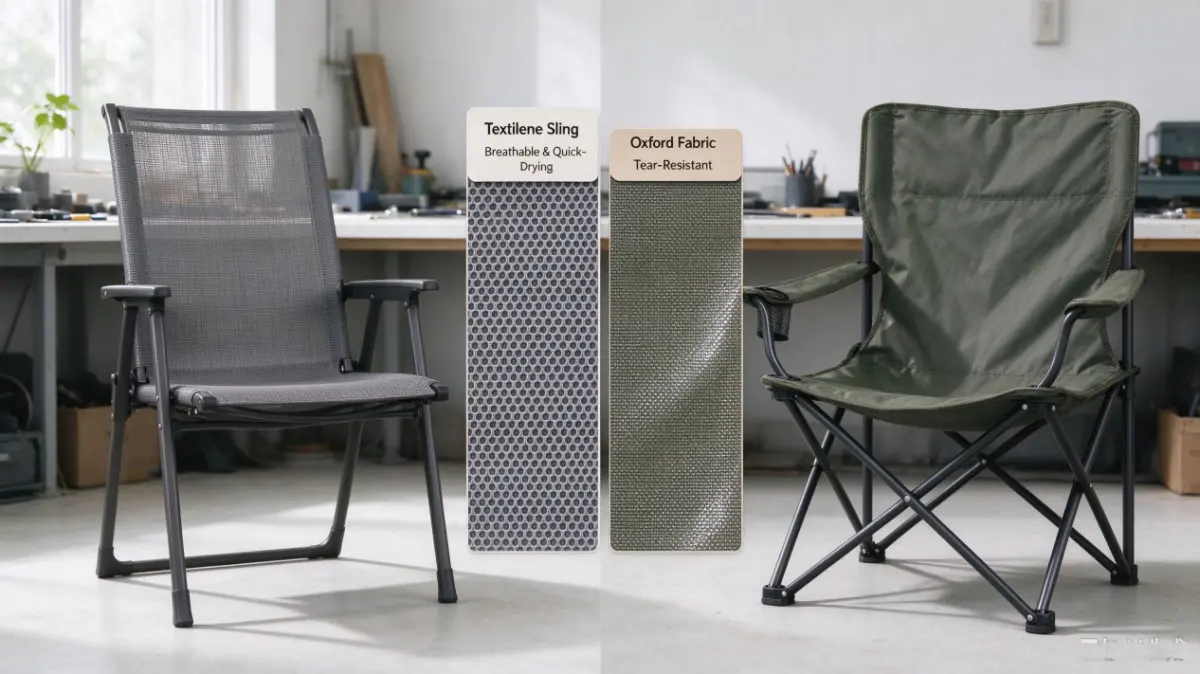
Textilene sling for fastdrying ventilation; PUcoated Oxford for heavyduty tearresistance.
Textiles & Sling Fabrics
Woven textiles provide breathable comfort for seating like beach chairs and loungers.
Textilene & PVC-Coated Sling Fabrics
High-strength polyester yarns with a protective PVC coating deliver tensile strength and prevent sagging, while open-weave mesh ensures ventilation and fast drying after rain.
Oxford Fabrics
Oxford fabric suits heavy-duty, portable gear like camping chairs and cots.
Polyurethane (PU) Coated Oxford (600D / 900D)
Classified by denier count with a PU or PVC backing for water resistance, offering extreme tear resistance and flexibility for repeated folding.
Technical Sourcing Reminders for B2B Importers
- Verify Denier and Coating: Match denier and PU thickness to load requirements.
- Request UV Inhibitors: Ensure stabilizers prevent cracking in high-sun regions.
- Assess Edge Binding: Use reinforced stitching to prevent fraying under tension.
Frequently Asked Questions (FAQ)
Q1: Which fabric option is best for heavy-duty camping or military-grade furniture?
A: Oxford fabric (600D/900D with PU coating) provides superior tear resistance and compact foldability.
Q2: How do Textilene sling fabrics perform in highly humid or rainy climates?
A: Their open-weave, hydrophobic structure prevents water pooling and ensures fast drying.
Q3: Are PE rattan materials suitable for folding furniture mechanisms?
A: Yes, high-grade synthetic variants maintain flexibility and durability during folding.
Wuhan Relaxhub Supply Solutions Co., Ltd. offers professional OEM/ODM manufacturing. Contact us for custom inventory needs.